

The Relevance Architect
“Less is more.”

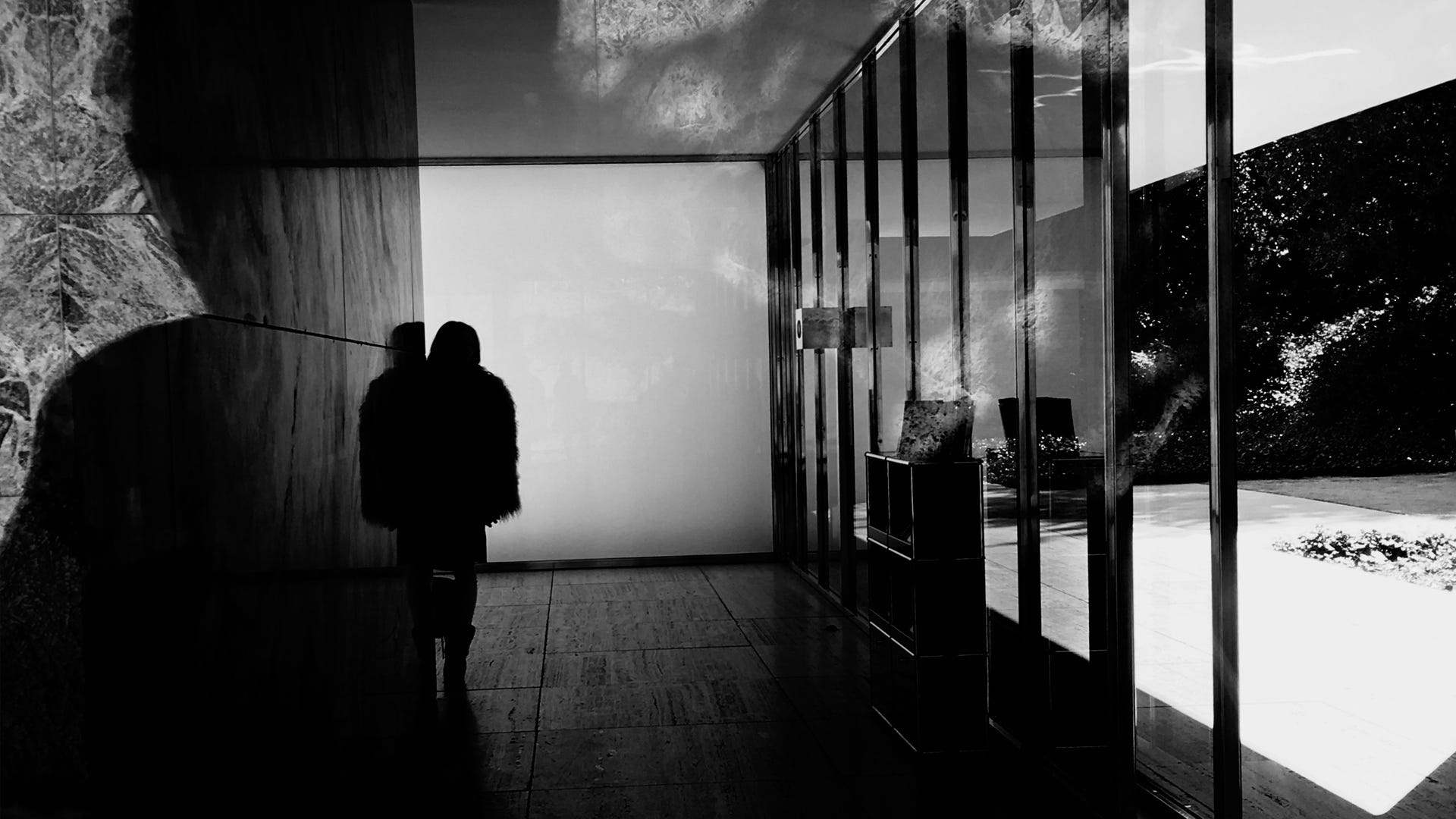
That wasn’t a design trend.
It was a discipline.
Ludwig Mies van der Rohe didn’t build for decoration.
He built for permanence.
Steel.
Glass.
Proportion.
Structure.
Every line carried weight.
Because when the environment shifts, ornament collapses first.
Structure survives.
Most companies are still designing for ornament.
Campaigns.
Moments.
Announcements.
Trend responses.
But we are no longer in a moment-based economy.
We are in a condition.
Change is no longer episodic.
It is environmental.
And environmental change doesn’t require prediction.
It requires architecture.
For years, disruption arrived in waves.
A new platform.
A new behavior.
A new cultural shift.
Companies would scramble.
Adapt.
Stabilize.
Then rest.
That rhythm is over.
What used to take five years now takes five weeks.
Consumer behavior pivots.
Technology embeds instantly.
Culture flips in real time.
And yet many organizations are still structured for calm waters.
Annual planning cycles.
Static brand books.
Siloed teams.
Linear roadmaps.
Built for predictability.
Operating in volatility.
“God is in the details.”
Details are not decoration.
They are decisions made in advance.
Load-bearing choices.
In architecture, you don’t design for the weather you hope for.
You design for the stress the building will endure.
The same is now true for brands.
Exponential technology isn’t the disruption.
Acceleration of behavior is.
AI didn’t just introduce new tools.
It recalibrated expectations.
Speed is assumed.
Iteration is assumed.
Personalization is assumed.
The customer has moved.
The organization often hasn’t.
So the question is no longer:
“What’s next?”
That question expires the moment it’s asked.
The more relevant question is:
“Are we built for what’s next?”
Not strategically.
Structurally.
Are your systems modular?
Is your culture elastic?
Is your brand a rigid slab of marble — or a framework that flexes without breaking?
Flexibility without identity is chaos.
Identity without flexibility is fragility.
Relevance lives in the tension between the two.
I’ve sat in rooms where leadership teams debate trends for hours.
AI.
Gen Z.
Spatial computing.
Creator economies.
They analyze the wave.
But rarely the vessel.
A ship built for calm waters cannot survive permanent turbulence.
And turbulence is now baseline.
Prediction is seductive.
Architecture is disciplined.
Prediction looks smart in slides.
Architecture looks invisible — until the pressure hits.
The brands that will endure this decade will not be the ones who correctly predict every shift.
They will be the ones structurally prepared to absorb shifts.
Shorter feedback loops.
Cross-functional fluency.
Creative systems that iterate without losing coherence.
Preparation over protection.
Design over reaction.
Less is more.
Not fewer ideas.
Fewer assumptions.
Not thinner ambition.
Stronger foundations.
Relevance is no longer seasonal.
It is structural.
And in a world where change is constant, the real competitive advantage is not foresight.
It is design.
Not the design of campaigns.
The design of adaptability itself.
So the question isn’t:
“What trend should we follow?”
It’s:
“What have we built that allows us to move at the speed of culture without losing who we are?”
Because change is no longer the disruption.
Rigidity is.