

Attention Is Exhausting
A revisitation series ahead of Cannes Lions: Gary Vaynerchuk

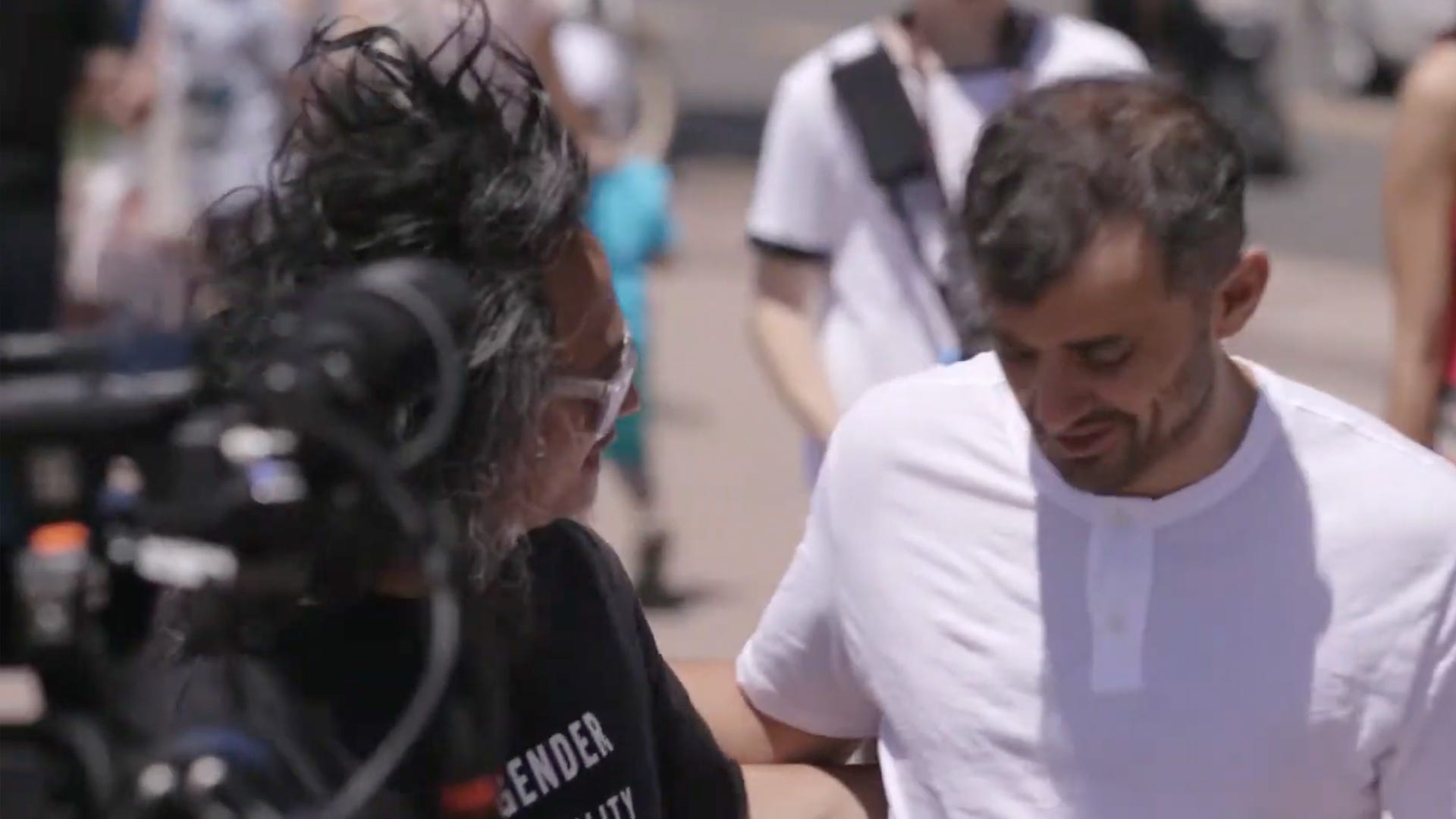
I’ve been revisiting a series of interviews I recorded almost a decade ago called Shingerviews.
What started as a trip down memory lane has become something else entirely.
A form of digital archaeology.
A chance to revisit conversations from an internet that felt very different from the one we inhabit today.
Before AI.
Before creator economies.
Before everyone became their own media company.
Before attention became the most valuable commodity on Earth.
One of those conversations was with Gary Vaynerchuk.
At the time, most people saw Gary as a social media guy.
A platform guy.
A digital evangelist.
Fast-talking.
Fast-moving.
Always chasing whatever came next.
But revisiting the interview now, I realized something.
Gary was never really obsessed with platforms.
He was obsessed with people.
And perhaps that’s why so many of his predictions aged so well.
Because platforms come and go.
Human behavior endures.
During our conversation in Cannes, he said something that has been sitting in my head ever since.
“I’m not a digital fan. I’m an attention fan.”
At the time it sounded like a smart marketing observation.
Today it feels like a cultural diagnosis.
Because attention quietly became the operating system of the modern internet.
Not content.
Not technology.
Not platforms.
Attention.
The ability to attract it.
Hold it.
Redirect it.
Monetize it.
Scale it.
Protect it.
The internet evolved from an information network into an attention marketplace.
And eventually attention became identity itself.
That’s the shift I don’t think many of us fully appreciated at the time.
A decade ago, social media was something you did.
Today it is something many people feel they are.
The distinction matters.
Because once people become media, attention stops being occasional.
It becomes ambient.
Persistent.
Competitive.
Always on.
What strikes me most about revisiting the interview is not what Gary got right.
It’s how he got it right.
When I asked him what platform intrigued him most, he mentioned a relatively obscure app called Musically.
Most marketers barely knew what it was.
Most adults had never heard of it.
Today we know it by a different name.
TikTok.
But the lesson isn’t that Gary predicted TikTok.
Lots of people predict platforms.
Most predictions age terribly.
The real insight was that Gary wasn’t looking at technology.
He was looking at behavior.
He noticed young people creating rather than consuming.
Performing rather than watching.
Participating rather than observing.
The platform itself was almost incidental.
The behavior was the signal.
That’s a very different way to understand the future.
And increasingly, I think it’s the only useful one.
Because technology changes quickly.
Human motivation changes slowly.
People still want status.
Belonging.
Recognition.
Connection.
Purpose.
The tools evolve.
The desires remain remarkably consistent.
Of course, none of us could fully see where that behavioral shift would lead.
Today we live inside the consequences.
Everyone is a publisher.
Everyone is a creator.
Everyone is a channel.
Everyone is a brand.
And everyone is competing for the same finite resource.
Human attention.
What began as opportunity slowly became expectation.
Then obligation.
Then exhaustion.
Creator burnout.
Algorithmic fatigue.
Performance anxiety.
The pressure to remain visible.
The fear of becoming irrelevant.
The constant feeling that silence itself is somehow risky.
Attention inflation.
Infinite supply.
Finite humans.
And perhaps that’s the defining emotional challenge of the modern internet.
Not information overload.
Attention overload.
There is simply too much of everything.
Too many notifications.
Too many updates.
Too many opinions.
Too many demands on our awareness.
Too many people trying to earn a place inside our heads.
What feels especially relevant now is that we’re about to do it all again.
AI is about to accelerate content creation beyond anything we’ve previously experienced.
Images.
Videos.
Music.
Ideas.
Campaigns.
Personalities.
Entire media ecosystems.
Generated instantly.
At near-zero cost.
The internet is about to become dramatically louder.
Not because humans are creating more.
Because machines are now creating too.
Which means abundance will cease to be impressive.
Production will cease to be remarkable.
Output will cease to be the flex.
Something else becomes valuable.
Judgment.
Taste.
Perspective.
Meaning.
Intention.
Humanity.
The things that cannot simply be automated into existence.
There was another moment in the interview that feels increasingly important.
Gary talked about how people consistently overestimate how quickly technology changes behavior.
I think history has proven him right.
Technology arrives quickly.
Behavior arrives slowly.
Then suddenly.
The internet didn’t change humanity overnight.
Neither did smartphones.
Neither did social media.
Neither will AI.
The real story is never the technology.
The real story is how humans adapt around it.
How habits evolve.
How trust evolves.
How identity evolves.
How culture evolves.
And that takes time.
As Cannes approaches once again, I find myself thinking less about the future of platforms and more about the future of attention itself.
For years we asked:
How do we get attention?
Today the more interesting question might be:
What kind of attention deserves to exist?
Because attention may be the economic engine of the internet.
But intention remains the human one.
And perhaps that’s the next great shift.
Moving from attention at all costs...
to attention with purpose.
Because the more abundant attention becomes...
the more meaningful attention becomes rare.
And rare things tend to become valuable.
Very valuable.